
Introduction
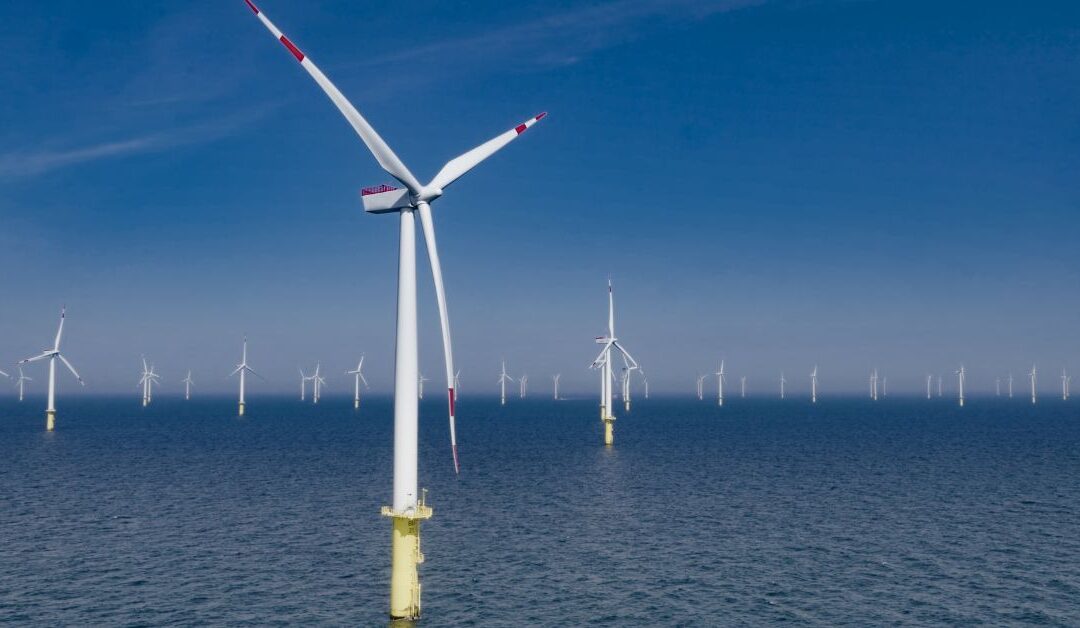
The energy landscape of 2025 is firmly centered around renewable solutions, with offshore wind standing at the forefront. Towering turbines scattered across the seas not only power millions of homes but also challenge marine engineering like never before, demanding specialized vessel operations, advanced subsea cabling, and a seismic shift in global trade routes.
Join us as we explore the world’sWorld’s 10 largest offshore wind farms in 2025, their scale, technological innovation, and what they mean for the marine engineering and trade sectors.
Why Offshore Wind Farms Matter in 2025
The World is shifting rapidly toward renewable energy. Solar, hydropower, and wind are competing to meet rising demand, but offshore wind is unique because it offers large-scale generation without consuming land. Offshore winds are stronger and more consistent, making turbines more efficient.
In 2025, global offshore wind capacity is projected to exceed 80 GW, with Europe, China, and Taiwan leading the way. Offshore wind doesn’t just reduce carbon emissions, it transforms industries. Ports, shipping firms, and engineering companies are adapting their business models around this energy revolution.
Marine Engineering & Trade Implications
Offshore wind projects drive an entire supply chain:
- Engineering Designs: Turbines now exceed 250 meters in height, demanding stronger foundations, more advanced materials, and specialized engineering.
- Logistics Challenges: A single turbine blade can be over 100 meters long, requiring custom vessels and heavy-lift cranes for transportation.
- Trade Impact: Components are manufactured across multiple countries —blades in Denmark, towers in Spain, and nacelles in Germany —before being shipped for assembly.
We monitor these projects to offer a practical view of how trade and engineering adapt when industries innovate at such a scale.
Also read: – What is the mooring rope of a ship and its types
10 Largest Offshore Wind Farms in the World (2025)
Below is our curated list of the ten largest, ranked by current or planned capacity:
1. Dogger Bank Wind Farm – United Kingdom (Up to 8.1 GW)
- Capacity & Scale: When fully completed, Dogger Bank is set to be the World’s largest, with an expected total capacity of 8.1 GW across its phases.
- Location: Built 125–200 km off England’s North East coast in the North Sea, comprising phases A, B, and C.
- Technology: Utilizes GE’s Haliade-X turbines (13 MW and 14.7 MW models).
- Impact: Once operational, capacity will power ~6 million homes.
- Engineering Opportunities: Massive subsea cabling, foundation systems, specialized installation vessels, and logistics for giant components.
2. Hornsea Wind Farm (Combined) – United Kingdom (~6 GW Planned)
- Capacity & Expansion: Hornsea includes Hornsea 1 (~1.2 GW), Hornsea 2 (~1.32 GW), and planned Hornsea 3 (~2.4 GW) plus Hornsea 4 (~1,080 MW), pushing the total to around 6 GW.
- Scale: Hornsea 2 is currently the most significant operational offshore wind farm at roughly 1.32 GW.
- Battery Storage: Association with a 600 MWh Tesla battery facility near Norwich to balance intermittent power, scheduled for 2026 deployment.
- Engineering Focus: Innovative storage integration, extensive turbine installations, and grid management.
3. Greater Changhua Offshore Wind Farm – Taiwan (2.4 GW Total)
- Capacity: The combined Greater Changhua project (Changhua 1, 2a, 2b, and 4) totals 2.4 GW, with phases 1 and 2a already operational since April 2024.
- Power Supply: Expected to support approximately 2.8 million households.
- Significance: Taiwan’s leading offshore wind initiative, signaling rapid Asia-Pacific growth.
4. Seagreen Offshore Wind Farm – Scotland (1.075 GW, expanding to 1.575 GW)
- Capacity: Operational since 2023 at 1.075 GW, currently expanding via Seagreen 1A to reach ~1.575 GW.
- Engineering Highlights: Features the World’s deepest fixed-bottom foundations (~58.7 m depth), 114 × 10 MW Vestas V164 turbines on steel jacket foundations.
- Logistics: Complex foundation installations, subsea cabling, and port transport coordination.
5. Borssele Offshore Wind Farm – Netherlands (1.5025 GW)
- Structure: A five-farm zone comprising Borssele I & II (752 MW), III & IV (731 MW), and V (9.5 MW), totaling 1.5025 GW.
6. Hornsea 1 – United Kingdom (1.2 GW)
- Overview: Hornsea 1, operational since 2019, delivers 1.2 GW, powered by 174 × 7 MW turbines.
- Historic Importance: First project to pass the 1 GW threshold in offshore wind.
7. Triton Knoll Wind Farm – United Kingdom (857 MW)
- Capacity: 857 MW, deployed about 20 miles off England’s east coast with 90 turbines.
8. East Anglia ONE – United Kingdom (800 MW)
- Features: Launched in 2019, capacity of 800 MW, with 102 turbines off the Suffolk coast.
9. Hollandse Kust Noord – Netherlands (~759 MW)
- Spec: Generating 759 MW from 69 × 11 MW turbines, fully operational since late 2023.
10. Walney Extension Offshore Wind Farm – United Kingdom (659 MW)
- Capacity: 659 MW (expansion of Walney Wind Farm), covering ~145 km² with 87 turbines.
10. Emerging Contender: Berwick Bank Wind Farm – Scotland (Proposed 4.1 GW)
While not yet operational, Berwick Bank was approved in July 2025 with an impressive 4.1 GW capacity and up to 307 turbines—poised to rival Dogger Bank in scale.
Also Read: – What is a Dry Dock? 10 Things You Need to Know
Business & Trade Opportunities in Offshore Wind (Natural Integration)
These mega-projects are more than energy sources; they generate ripple effects across marine engineering and global trade:
Marine Engineering Demand
- Specialized Vessels & Foundation Works: Larger turbines require bigger installation ships and advanced foundation engineering, areas where Mets tracks innovation and coordination
- Subsea Infrastructure: Cable laying, trenching, and electrical installation demand precision engineering services that these projects have shaped.
- Floating vs. Fixed Foundations: Emerging techniques (like floating platforms) present new design and trade implications.
Logistics & Global Trade
- Equipment Transport: Giant blades and tower sections often ship from multiple countries, requiring international coordination and customs navigation.
- Regional Manufacturing: Projects may lead to localized assembly hubs—or a shift in component sourcing strategies.
- Port Infrastructure: Ports must adapt to handle oversized cargo, reinforcing port engineering trends.
Maintenance & Support Services
- Continuous turbine upkeep, monitoring, and offshore repair vessels offer recurring contracts and opportunities for marine operations firms.
These prospects emerge naturally from tracking offshore wind growth—not marketing, but an insightful lens into industry opportunities.
Also read: – Boat vs Ship: 10 Ways to Help You Tell the Difference
Technological Trends Driving Offshore Growth
Floating Foundation Innovation
Projects like Hywind Tampen (Norway) showcase the future: 11 turbines on spar-buoy floating bases, serving offshore oil platforms, indicative of hybrid energy usage and novel engineering challenges.
Turbine Size Escalation
Turbines have ballooned to 14–20 MW. Underwater aerodynamic noise is gaining attention as turbines grow; research shows environmental acoustic impacts on marine life are becoming significant.
Digital & Predictive Maintenance
AI and robotics are increasingly used for O&M efficiency, and autonomous drones, robotic inspections, and predictive analytics are making offshore operations smarter.
Grid Stability Solutions
Battery systems, like the 600 MWh installation associated with Hornsea 3 (expected operational by 2026), are key to integrating intermittent offshore power into stable grids.
Regional Drivers: Europe, Asia, North America
- Europe: UK, Netherlands, Scotland lead with mega-projects like Dogger Bank, Hornsea, Seagreen, and Borssele.
- Asia-Pacific: Taiwan (Greater Changhua) is scaling fast; overall offshore wind capacity in APAC is projected to climb from 664 GW today to 990 GW.
- North America: Facing regulatory uncertainties—e.g., U.S. leasing paused under recent decisions, but existing projects by European firms continue under new constraints.
Challenges & Future Outlook
Shaping offshore wind’s next decade involves tackling:
Capital & Cost Pressures
Rising interest rates and supply constraints have forced developers like Ørsted to scale back plans and even issue massive funding rounds to continue existing projects.
Engineering Complexities & Ecosystem Impact
Infrastructure complexity escalates with turbine size, leading to reliability issues (e.g., turbine blade failures) and environmental concerns like underwater noise.
Policy & Regulatory Risks
In the U.S., halted leasing underlines how political shifts can disrupt offshore energy investments.
Also read: – Driving Global Trade: The 10 Major Dry Bulk Cargoes
Conclusion
Offshore wind in 2025 is not just an energy story—it’s a marine engineering and trade saga. From Dogger Bank’s record-breaking scale to Berwick Bank’s audacious design, these projects ignite demand for skilled engineering, logistics innovation, and global collaboration.
For marine engineering and trade professionals—like the insights that Mets follows, understanding these developments helps position for emerging opportunities in vessel design, subsea tech, offshore maintenance, and supply chain optimization.
As offshore wind farms swell in number and capacity, they become more than power stations; they become the driving force behind the next wave of marine engineering and trade transformation.
FAQ Section
Which is the largest offshore wind farm in 2025?
Dogger Bank Wind Farm, with an anticipated 8.1 GW capacity, is set to be the World’s largest.
How much power can an offshore wind farm generate?
Top farms range from hundreds of MW (e.g., Triton Knoll at 857 MW) to several GW (e.g., Seagreen expanding to ~1.575 GW).
Which country leads in offshore wind?
The United Kingdom leads in sheer project scale, with many top global wind farms off its coast.
What role does marine engineering play in offshore wind?
Critical roles include foundation engineering, subsea cabling, installation logistics, vessel operations, and maintenance platforms.
Are offshore wind farms cost-effective in the long term?
While upfront costs are high, falling turbine costs, scale efficiencies, and grid stabilization technologies (like large battery systems) are improving long-term economics.