
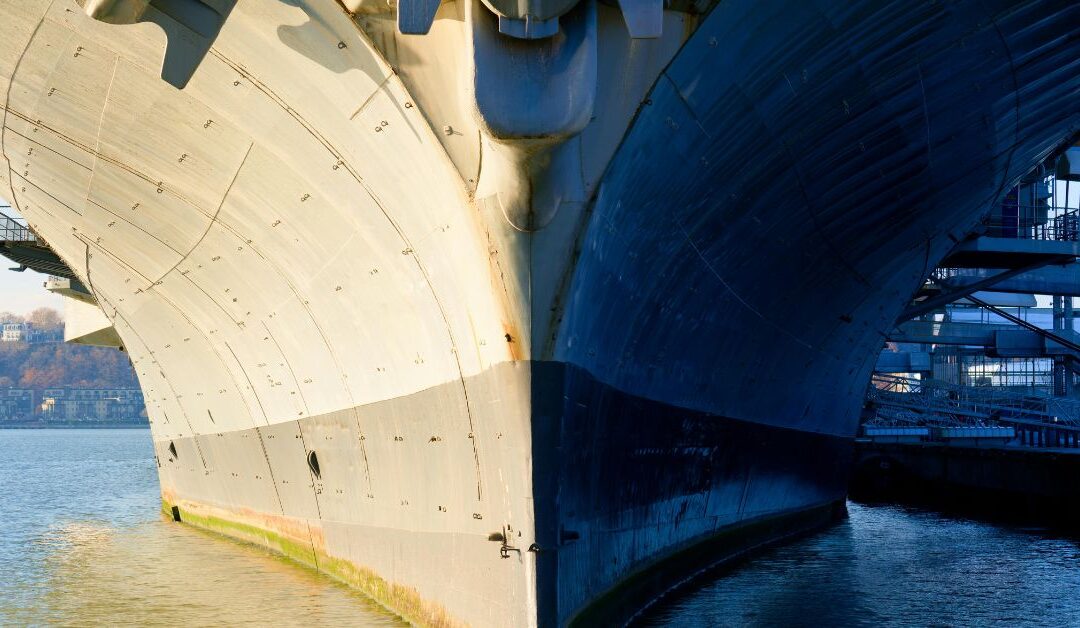
The hull is the heart of a ship, literally. It separates the interior of a ship from the surrounding water. A breach in hull integrity can lead to anything from minor inconvenience to catastrophic damage. Cracking in a hull is not merely a cosmetic issue or a localized one. It can lead to structural compromise, safety hazards, and decreased service life.
This article seeks to give a comprehensive and actionable understanding of what causes hull cracking, how to spot the early warning signs, and, most importantly, how to stop it from getting worse. The focus is practical knowledge, with insights into marine engineering and hull inspection practices.
The Causes Behind Hull Cracking
Cracks in ship hulls do not develop for no reason. They are symptoms of structural and/or operational issues within the vessel. Identifying the common reasons can help point the way to the solutions.
The following five causes are among the most likely and are dealt with often in the field.
1. Stress Concentration
Stress concentration is a basic structural engineering concept. A ship endures a variety of loads throughout its lifetime. Waves, cargo, and machinery all create vibrations that lead to stresses in the hull. A material such as steel can withstand high levels of stress overall, but those stresses are not evenly distributed. Sharp corners, cutouts, weld seams, stiffeners, and changes in geometry all create high-stress zones in the hull.
The higher the stress, the more likely that a fatigue crack will eventually appear. Stress concentration is a particular concern in thick shell structures around areas like cargo holds, ballast tanks, and other discontinuities.
2. Material Fatigue
Continuous cyclic loading and unloading is the normal operating condition for a marine vessel. Sometimes, these loads are small, but with repetition, they can lead to material fatigue. The flexing or straining of a material such as steel or aluminum may begin with micro-cracks that aren’t visible to the naked eye. However, with enough cycles, these can grow until a visible crack appears.
3. Saltwater Corrosion and Pitting
Continuous exposure to seawater and air is corrosive. Corroded areas have lost structural strength and are more prone to cracking. Particularly for structural members such as stiffeners or bulkheads, corrosion can be a significant factor.
Pitting corrosion, which forms local dimples in the hull material, is an especially common precursor to crack initiation.
4. Poor Design or Workmanship
Design flaws or shoddy workmanship can be the source of some hull cracks. This could be a lack of weld profile, or insufficient stiffening at a known high-stress location. Improper welding technique or skipping steps during retrofit operations can also lead to structural weakness.
5. Impact or Collision
Impacts can be an obvious reason for hull cracking. This could be from another vessel, a grounding event, or hitting a dock structure. These kinds of cracks may not propagate immediately, but they often will over time. Stress concentration is often the reason cracks worsen.
Detecting the Warning Signs
Preventing further crack development requires first detecting cracks or the potential for them early. In many cases, early signs may be there, but a crew may be so focused on their primary work that they don’t notice.
Visible Surface Cracks
In some cases, surface cracks are visible near welds or frame corners. This is often a hairline crack that will grow if left unaddressed. Visible cracks can often indicate that subsurface cracking has already taken place.
Paint Flaking/Rust Trails
If paint layers separate or flake near joints or welds, it could be an early indication of movement or separation underneath. Rust lines or streaks coming from a weld or crack site are often the result of subsurface structural fatigue.
Deformation of Hull Plates
If hull plating appears buckled or distorted, that may be an indication of compromised support members or weakening from cracking. Buckling or deformity often occurs before or along with cracking in areas of high stress.
Unusual Vibration or Sound
A change in the normal operating sound or vibration of a vessel can be an indication that a structural element is not performing as it should. A crack may change the stiffness of a structure, and hence its natural frequency.
Proven Methods to Stop Further Cracking in a Hull
Preventing further cracking is often more complex than simply repairing what is already present. It requires a multi-faceted approach of inspection, repair, design modification, and operational awareness.
1. Develop a Thorough Inspection Routine
The first step in preventing further hull cracking is detailed and regular inspections. Inspection frequency will vary based on vessel type and size. These may occur monthly, quarterly, or annually. It is important to note that the quality of an inspection is more important than the frequency.
Visual Inspection: This can be a simple walkthrough inspection of the hull interior/exterior. Catching early signs is the goal here.
Non-Destructive Testing (NDT): Ultrasonic testing (UT), magnetic particle testing (MT), dye penetrant testing (PT) are among the most common NDT methods used to find surface and subsurface cracks.
Ultrasound/Radiography: For thicker members, particularly around cargo holds or ballast tanks, these more advanced methods help to detect hidden flaws.
Creating and sticking to a disciplined inspection program not only uncovers cracks but also allows for tracking the growth rate and potential cause analysis. Crews or technical service providers will often track recurring crack sites using diagrams or digital record keeping in order to spot trends.
2. Use Strategic Structural Reinforcements
If a crack has been found, the key question is whether it can be safely reinforced to prevent a reoccurrence. In many cases, a simple welding repair will not suffice. The right reinforcement must be designed and applied to shift stresses away from that point.
Doubler Plates: Doubler plates are an extra metal plate welded over the area that has or is at risk of cracking. Care must be taken when designing and applying these to not create new stress points at the edges of the doubler.
Addition of Brackets/Stiffeners: In some cases, a frame or stringer around a cracked zone can be reinforced. This stabilizes the hull in that area.
Improving Weld Transition: If the crack is at a weld point, improving the transition at that spot by removing sharp geometry can reduce stress risers.
Every reinforcement should be thoroughly engineered with an understanding of how the hull is loaded and how it behaves under load. Incorrect reinforcement can actually make the problem worse.
Also Read: – Common Ship Hull Problems and How to Fix Them
3. Mitigate Corrosion with Protection Systems
Corrosion, as mentioned above, weakens the hull, leading to crack initiation. Preventing corrosion and subsequent loss of strength can prevent cracks from forming.
Cathodic Protection (CP): Sacrificial anodes or impressed current systems can be used to prevent galvanic corrosion in submerged hull areas.
Surface Coatings/Paint Systems: Marine coatings are critical for hull protection. Regular maintenance, inspection, and reapplication where necessary is vital.
Moisture Control in Internal Hull Compartments: Internal corrosion from water trapped in ballast tanks, voids, etc. can be prevented by ensuring good ventilation and moisture removal.
Combatting corrosion is as important as combatting stress as often they go hand-in-hand as causes of failure.
4. Reassess Operational Procedures
In some cases, the hull is cracking not because it is poorly designed or built. It could be that it is being overloaded or exposed to more stress than it should be. This can be a more subtle issue to fix, but it’s crucial to consider.
Load Management: Ensure that cargo is evenly distributed. Don’t overload the vessel or overload cargo stowage in a way that causes unusual stress concentrations.
Navigational Changes: Constant pounding in heavy seas or long-term repetitive loading in a high-stress region can fatigue a well-designed hull. Consider slowing down, changing course, or altering operations to reduce loading.
Crew Awareness and Training: Training crew members to recognize structural changes, log them, and take safety precautions is another layer of defense.
Crack prevention is as much an engineering issue as an operational discipline.
5. Evaluate Repair vs. Replacement
Cracks are not always repairable. Some can appear minor but are in a high-stress area or have likely already developed subsurface spread. Class rules and guidance from regulatory authorities can also help guide this.
Minor Cracks: These can be repaired with weld, grinding, reinforcement, and inspection.
Moderate Cracks: Moderate cracks may require replacement of the plate along with some stiffening/reinforcement and reevaluation.
Major Cracks or Recurring Damage: In cases of significant cracks or recurring issues, it may be time to look at design modification or hull section replacement.
Repair vs. Replace decisions should always have safety, not cost, as the priority. Recurrent failure of the same area should be taken especially seriously.
How Mets Supports Hull Integrity and Crack Prevention
Crack prevention and hull maintenance aren’t one-size-fits-all tasks—they require technical insight, experience in varied vessel types, and a practical understanding of marine structural behavior. At Mets, the approach to hull integrity is grounded in engineering discipline and hands-on fieldwork.
The team is often involved in:
- Conducting detailed hull inspections, both afloat and in dry dock, using industry-standard non-destructive testing methods like ultrasonic testing, dye penetrant inspection, and visual surveys.
- Assessing recurring crack patterns to identify structural vulnerabilities that may not be visible at first glance. These insights often guide owners and operators in making informed decisions about reinforcement or redesign.
- Executing on-site repairs and reinforcements that are in line with class society requirements and sound engineering judgment. This includes adding stiffeners, redesigning weld layouts, and improving structural transitions to reduce stress concentration.
- Integrating corrosion control strategies into repair projects—such as surface preparation, protective coating application, and sacrificial anode installation—ensuring that the repair also addresses underlying environmental factors.
Mets brings a practical, solutions-oriented mindset to each vessel, whether it’s a commercial cargo ship, a fishing vessel, or a support craft. While every ship is different, the principle remains the same: long-term hull integrity depends on technical expertise, material knowledge, and preventative thinking.
Prevention of Recurrence: Building a Long-Term Structural Mindset
Preventing further cracking is not just about addressing individual defects when they arise. It is about creating a maintenance and operation mindset that plans ahead.
Document Everything: Build a history of where cracks occur, what the repairs were, and possible causes. Trends often emerge, and patterns help engineers predict what other areas might be at risk.
Design Feedback Loop: Recurring crack information should be funneled back to the design team in order to make suggestions for new builds or retrofits.
Periodic Standard/Design Review: As ships age or their use is modified, it is often worthwhile to go back and revisit the assumptions of original load/stress/corrosion estimates.
Many in the marine engineering field are coming to prefer a predictive, rather than reactive, approach to crack prevention. Planning for the worst case, thinking ahead, and treating maintenance as risk management rather than as a cost are all advocated.
Also Read: – Top vessel repair companies
Final Thoughts
Cracking in hull structures can be a common issue, but it is always a serious one. Preventing further cracking in a hull structure is not an overly difficult task but does require a strong understanding of material behavior, inspection, and reinforcement strategies.
Preventing further cracking is a combination of technical and strategic. It requires the right tools and techniques, but also training, education, and planning. For the vessel operator, engineer, or technician, it is essential to remember that a crack is a symptom rather than a defect itself. It is the job of those in the marine engineering and ship inspection fields to help ferret out those symptoms and to give the owners/operators the information they need to keep the vessel afloat and sailing for as long as possible.
Frequently Asked Questions
1. What is the most common cause of cracking in a ship’s hull?
The most common cause is fatigue stress, which results from repeated cyclic loading during regular operations. Over time, this causes microscopic cracks to form in high-stress areas such as weld seams, cutouts, and corners. These cracks grow with continued stress cycles, eventually becoming visible or structurally significant.
2. Are all hull cracks dangerous?
Not all cracks are immediately dangerous, but every crack warrants attention. Minor surface cracks may not compromise the vessel’s integrity right away, but they can grow or indicate deeper structural issues. Regular inspections and timely assessments are crucial to determine if a crack is superficial or structural.
3. Can hull cracks be repaired at sea?
In limited cases, temporary repairs can be made at sea using patching, welding, or reinforcement techniques. However, these should be viewed as emergency solutions, not permanent fixes. Full assessments and structural reinforcements should be carried out in dry dock or under controlled conditions when possible.
4. How often should hull inspections be performed?
Inspection frequency depends on the vessel’s size, age, usage, and regulatory requirements. However, it’s generally recommended to perform visual hull inspections monthly, with more detailed non-destructive testing annually or bi-annually, especially in high-risk areas such as cargo holds and ballast tanks.
5. What are the best methods to detect hidden cracks?
The most reliable methods include ultrasonic testing (UT), dye penetrant testing (PT), and magnetic particle testing (MT). These techniques are widely used in marine engineering to detect cracks beneath paint, coatings, or metal surfaces, especially in welds and internal frames where visual inspection isn’t enough.